How Efficient Is an Air Source Heat Pump?
Published: July 2026
Reading Time: 5 minutes
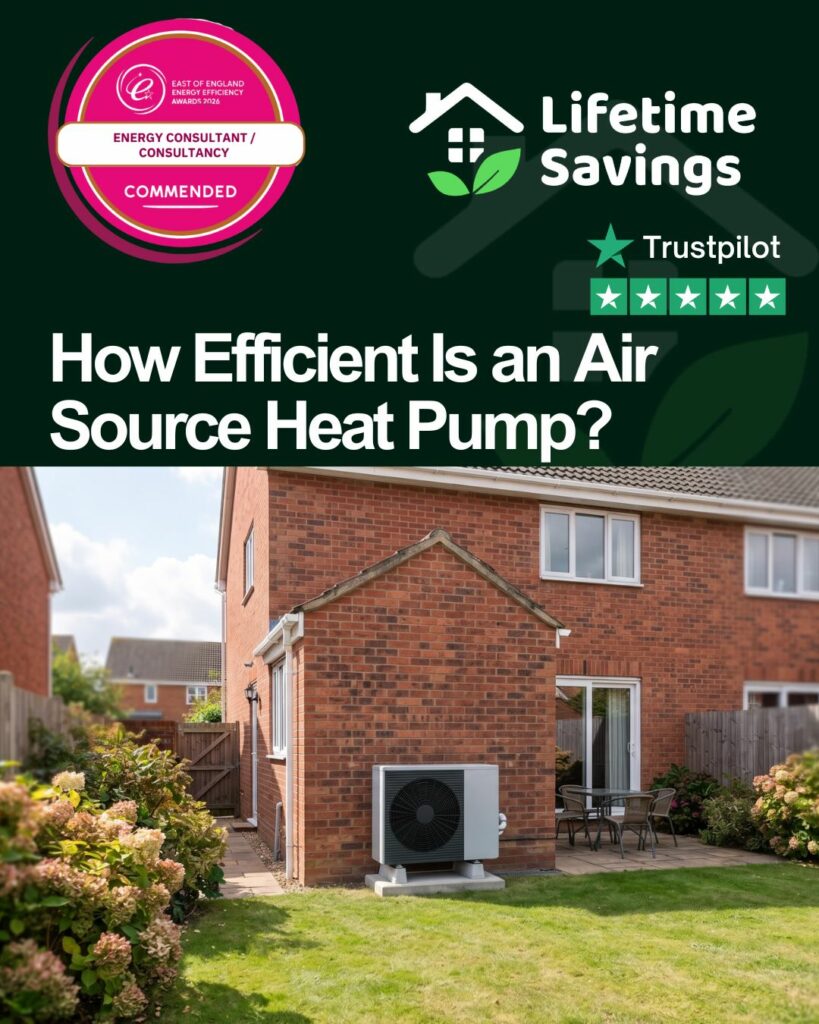
How Efficient Is An Air Source Heat Pump
Introduction
Efficiency is one of the main reasons homeowners are becoming interested in Air Source Heat Pumps.
With rising energy costs and increasing awareness of climate change, many households are looking for heating systems that use energy more effectively while keeping their homes comfortable.
An Air Source Heat Pump works differently from a traditional boiler. Instead of burning fuel to create heat, it transfers naturally occurring heat from the outside air into your home.
This makes it one of the most efficient renewable heating technologies available today.
1. What Does Efficiency Mean?
When we talk about heating efficiency, we are looking at how much useful heat a system can produce compared with the energy it uses.
A traditional boiler burns fuel to generate heat.
An Air Source Heat Pump uses electricity to move existing heat from the air outside into your home.
Because it is transferring heat rather than creating it from fuel, it can achieve very high levels of efficiency.
2. How Efficient Is an Air Source Heat Pump?
A correctly designed and installed Air Source Heat Pump can produce several units of heat energy for every unit of electricity it uses.
This means the system can deliver more heat than the electricity used to operate it.
The exact efficiency will depend on factors such as:
• The design of the system.
• The size and type of property.
• The insulation levels.
• The heating controls.
• How the system is used.
3. Why Installation Matters
Even the most efficient heating technology will only perform well if it has been correctly designed and installed.
A professional installer will assess your home before installation to ensure the system is the right size and suitable for your heating requirements.
An incorrectly sized system may not perform as efficiently as expected.
4. Insulation Helps Improve Performance
The efficiency of your heating system is closely linked to how well your home retains heat.
A well insulated property requires less energy to maintain a comfortable temperature.
Before installing an Air Source Heat Pump, it is important to consider improvements such as:
• Loft insulation.
• Cavity wall insulation.
• Draught proofing.
• Upgrading inefficient windows where appropriate.
5. Air Source Heat Pumps and Traditional Boilers
Modern gas boilers can be efficient, but they rely on burning fuel to create heat.
An Air Source Heat Pump takes a different approach by using renewable heat from the air around your home.
As the UK continues to move towards lower carbon heating, Air Source Heat Pumps are expected to become an increasingly important part of the future energy landscape.
6. Combining Air Source Heat Pumps with Solar Panels
One way homeowners can improve their energy efficiency even further is by combining an Air Source Heat Pump with solar panels.
Solar panels generate electricity from sunlight, which can help power your home and support your heating system.
This combination can help homeowners make better use of renewable energy and reduce reliance on electricity from the grid.
Key Takeaways
• Air Source Heat Pumps are highly energy efficient.
• They transfer heat rather than burning fuel to create it.
• Correct installation is essential for the best performance.
• Good insulation helps maximise efficiency.
• Solar panels can complement an Air Source Heat Pump system.
• Government support may be available through schemes such as the Boiler Upgrade Scheme.
Did You Know?
The efficiency of an Air Source Heat Pump can vary depending on the property, system design and weather conditions. This is why a professional survey is important before installation.
Conclusion
Air Source Heat Pumps are one of the most efficient ways to heat many homes because they use energy differently from traditional heating systems.
While the exact savings and efficiency will depend on your individual property, a correctly designed system can provide reliable heating while reducing carbon emissions and improving energy performance.
For homeowners looking towards the future, an Air Source Heat Pump offers an opportunity to combine comfort, efficiency and renewable technology.
Coming Next
Blog 011: Is My Home Suitable for an Air Source Heat Pump?
Related Articles
- Blog 002: Ten Reasons to Choose an Air Source Heat Pump
- Blog 004: How Does an Air Source Heat Pump Work?
- Blog 007: Can an Air Source Heat Pump Save You Money?
- Blog 011: Is My Home Suitable for an Air Source Heat Pump?
About the East of England Air Source Heat Pump Guide
The East of England Air Source Heat Pump Guide is produced by Lifetime Savings to help homeowners understand renewable heating, Government funding and the latest low carbon technology.
Our aim is to provide clear, practical and impartial information that helps homeowners make informed decisions about improving their home’s energy efficiency.
Solar Panel, Insulation, Heating Grants Lifetime Savings Can Help You Access Government Grants