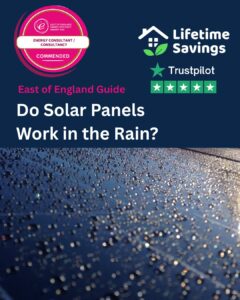
Do Solar Panels Work in the Rain?
⏱️ At a Glance
✔ 4-minute read
✔ Easy-to-understand guide
✔ Written for homeowners
✔ East of England focused
Quick Answer
Yes. Solar panels continue to generate electricity when it’s raining. They work using daylight, not just direct sunshine. While heavy cloud and rain may reduce the amount of electricity produced, your Solar panels will usually keep working during daylight hours.
Living in the UK means we’re all familiar with rainy weather!
One of the biggest questions homeowners ask is whether Solar is worthwhile if it rains so often.
The answer may surprise you.
Solar panels are designed to work in a range of weather conditions, including rain, cloud and sunshine. They don’t stop producing electricity simply because the weather changes.
Why Do Solar Panels Still Work?
Solar panels generate electricity from daylight.
Even on a cloudy or wet day, daylight still reaches your roof.
That means your panels can continue producing electricity, although output is normally lower than on a bright summer’s day.
This is completely normal and is one of the reasons Solar remains popular across the UK.
People Also Ask
Do Solar panels work on cloudy days?
Yes. Cloud cover reduces the amount of electricity generated, but Solar panels continue working whenever there is daylight.
Does rain damage Solar panels?
No. Modern Solar panels are designed to cope with normal UK weather, including rain, wind and frost.
Does rain help clean Solar panels?
Rain often washes away light dust and dirt. However, heavier build-up such as moss, bird droppings or leaves may occasionally need professional attention.
Myth vs Fact
❌ Myth
“Solar panels are no good because the UK gets too much rain.”
✅ Fact
Solar panels are installed successfully across the UK because they generate electricity from daylight rather than heat. Rainy weather may reduce output, but it doesn’t stop your Solar panels from working.
Why Solar Makes Sense in the East of England
The East of England enjoys some of the highest sunshine levels in the UK.
Homeowners in Norfolk, Suffolk, Essex, Cambridgeshire, Hertfordshire and Bedfordshire are increasingly exploring Solar as a way to improve their home’s energy efficiency and reduce their reliance on electricity from the grid.
Every property is different, but many homes are suitable for Solar.
Government Support
The Warm Homes Scheme is expected to help eligible households improve their home’s energy efficiency.
As further details are released, eligibility may depend on:
- Household income.
- Certain qualifying benefits.
- Eligible postcode areas.
- Your home’s EPC rating.
Lifetime Savings Ltd keeps up to date with official guidance and explains the latest information in plain, easy-to-understand language.
Key Takeaways
- Solar panels work in the rain.
- They generate electricity from daylight, not heat.
- Cloudy weather reduces output but doesn’t stop generation.
- The East of England is well suited to Solar.
- Understanding Solar helps you make informed choices about your home.
Frequently Asked Questions
Is rain bad for Solar panels?
No. Solar panels are designed to withstand normal UK weather conditions.
Can Solar panels generate electricity on cloudy days?
Yes. They usually produce less electricity than on sunny days but continue working whenever there is daylight.
Is Solar still worth considering in the UK?
Many homeowners think so. Modern Solar technology is designed for the UK’s climate, making it a practical option for many properties.
Your Next Step
Now that you know Solar works in rain and cloudy weather, you may be wondering how much electricity it can actually produce.
Read Guide 19 – How Much Electricity Do Solar Panels Produce?
Trusted advice from Lifetime Savings Ltd is here to help homeowners across the East of England understand Solar with confidence.
Editor’s Note
Last reviewed: July 2026
This guide is based on current industry knowledge and Government guidance available at the time of writing. Solar performance varies depending on your roof, location, weather conditions and the type of system installed.
Solar Panel, Insulation, Heating Grants Lifetime Savings Can Help You Access Government Grants