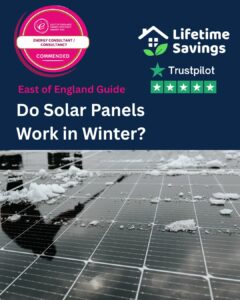
Do Solar Panels Work In Winter
Do Solar Panels Work in Winter?
⏱️ At a Glance
✔ 4-minute read
✔ Easy-to-understand guide
✔ Written for homeowners
✔ East of England focused
Quick Answer
Yes. Solar panels continue to generate electricity during winter. Although the days are shorter and there are fewer hours of sunshine, Solar panels work using daylight, not just bright sunshine. This means they can still produce electricity on cold, cloudy winter days.
Many people believe Solar only works during hot summer weather.
That’s one of the biggest myths about Solar.
The truth is that Solar panels are designed to generate electricity all year round, including throughout the British winter.
While production is usually lower during the darker months, your panels don’t stop working just because it’s cold or cloudy.
How Do Solar Panels Work in Winter?
Solar panels capture daylight and convert it into electricity.
Even when the sky is grey, daylight still reaches your panels.
During winter, there are:
- Fewer daylight hours.
- Lower sun angles.
- More cloudy days.
This means your Solar system will usually produce less electricity than it does in summer—but it will continue to generate power.
Common Google Question
Do Solar panels work on cloudy days?
Yes.
Solar panels don’t need direct sunshine to generate electricity. They use daylight, so they can continue working even when it’s overcast. Bright sunny days usually produce more electricity, but cloudy weather doesn’t stop your system from working.
Myth vs Fact
❌ Myth
“Solar panels are useless during the British winter.”
✅ Fact
Solar panels continue generating electricity throughout winter. They usually produce less than in summer because the days are shorter, but they still work whenever there is daylight.
Why Is the East of England Well Suited to Solar?
The East of England is one of the sunniest regions in the UK.
Whether you live in Norfolk, Suffolk, Essex, Cambridgeshire, Hertfordshire or Bedfordshire, your home may receive enough daylight for Solar to be worth considering.
Every property is different, so it’s important to understand what may be suitable for your home.
Thinking About Government Support?
The Government is continuing to develop the Warm Homes Scheme to improve home energy efficiency.
If you think you may qualify, it’s worth keeping up to date with the latest announcements. Eligibility is expected to depend on factors including:
- Household income.
- Qualifying benefits.
- Eligible postcode areas.
- Your home’s EPC rating.
Lifetime Savings Ltd aims to explain these updates clearly, helping homeowners understand their options as new information becomes available.
Key Takeaways
- Solar panels work throughout the year.
- They generate electricity using daylight, not heat.
- Winter production is usually lower than summer production.
- The East of England is one of the UK’s best regions for Solar.
- Learning about Solar now helps you prepare for the future.
Frequently Asked Questions
Do Solar panels stop working when it’s cold?
No. Cold weather doesn’t stop Solar panels from generating electricity.
Will snow damage my Solar panels?
Solar panels are designed to withstand normal UK weather conditions, including snow and frost.
Is winter a good time to learn about Solar?
Yes. Many homeowners use the quieter winter months to research Solar before making decisions later in the year.
Your Next Step
Now that you know Solar works all year round, you might be wondering what happens on rainy days.
Read Guide 18 – Do Solar Panels Work in the Rain?
Every guide in the Lifetime Savings Ltd Learning Centre is written to help homeowners across the East of England make informed decisions about Solar and Government energy support.
Editor’s Note
Last reviewed: July 2026
This guide reflects the latest information available at the time of writing. Solar performance varies depending on your property’s location, roof position and weather conditions. Government support schemes and eligibility criteria may change over time.