How Does an Air Source Heat Pump Work?
Published: July 2026
Reading Time: 5 minutes
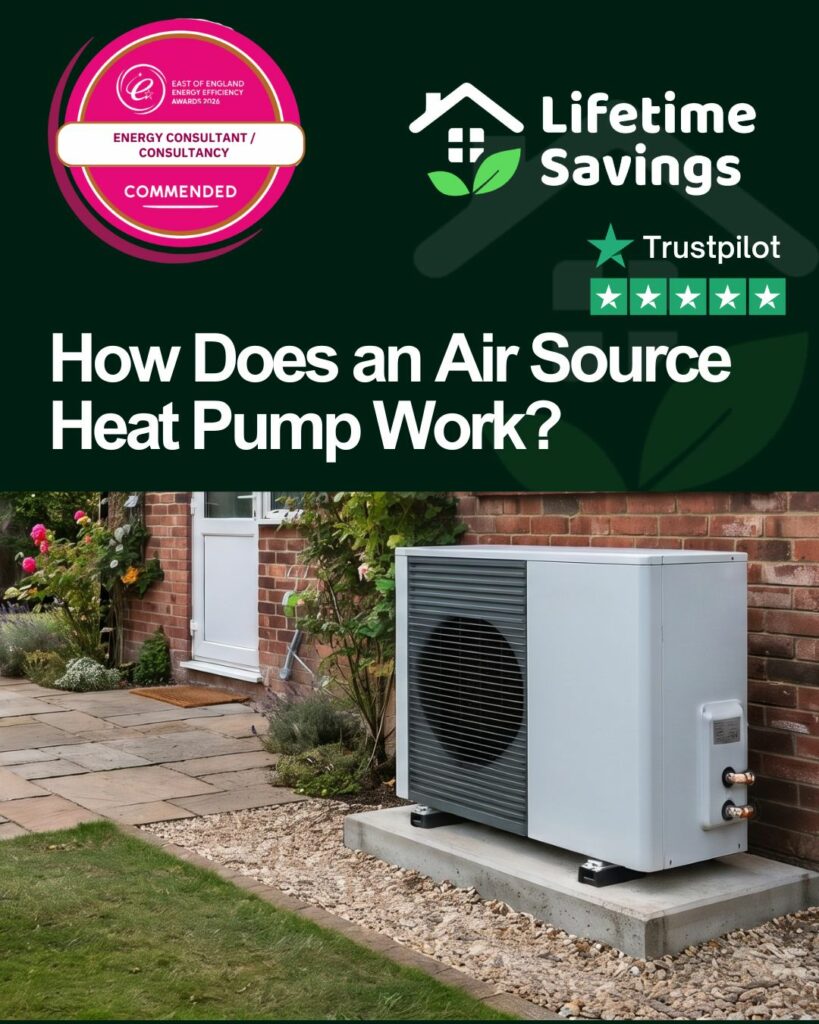
Introduction
Many homeowners are interested in installing an Air Source Heat Pump, but are unsure how the technology actually works.
The good news is that the process is much simpler than many people think. Rather than creating heat by burning fuel, an Air Source Heat Pump collects natural heat from the outside air and transfers it into your home.
Let’s take a closer look at how it works.
1. The Outdoor Unit Collects Heat
The outdoor unit contains a fan that gently draws air across a heat exchanger.
Even when the weather feels cold, the outside air still contains heat energy. The Air Source Heat Pump captures this energy and begins the heating process.
This is why modern systems continue to work throughout the British winter.
2. The Refrigerant Absorbs the Heat
Inside the unit is a special refrigerant.
As the outside air passes over the heat exchanger, the refrigerant absorbs the available heat. This causes the refrigerant to warm up before moving to the next stage of the process.
3. The Compressor Increases the Temperature
The warmed refrigerant passes through a compressor.
Compressing the refrigerant raises its temperature significantly, producing the heat needed to warm your home and provide hot water.
This is one of the reasons why an Air Source Heat Pump is so energy efficient.
4. Heat Is Delivered Into Your Home
The heated refrigerant transfers its warmth into your central heating system.
This heat circulates through your radiators or underfloor heating while also providing hot water for everyday use.
Once the heat has been transferred, the refrigerant cools and the process begins again.
5. The Cycle Repeats All Day
An Air Source Heat Pump does not simply switch on and off like a traditional boiler.
Instead, it continuously adjusts its output to maintain a comfortable indoor temperature. This steady approach helps improve efficiency while keeping your home warm throughout the day.
Why Is This So Efficient?
Because an Air Source Heat Pump transfers heat instead of generating it by burning fuel, it can provide far more heat energy than the electricity it uses to operate.
This makes it one of the most energy efficient heating systems available for many homes.
Key Takeaways
• An Air Source Heat Pump collects heat from the outside air.
• A refrigerant absorbs and transfers that heat.
• A compressor increases the temperature.
• Heat is delivered through your heating system and hot water cylinder.
• The process repeats continuously to provide reliable heating.
Did You Know?
Air Source Heat Pumps work automatically throughout the day, adjusting their output to match the heating needs of your home and helping maintain a comfortable indoor temperature.
Conclusion
Although the technology inside an Air Source Heat Pump is advanced, the principle is straightforward. It collects natural heat from the air, increases its temperature and transfers that warmth into your home.
Understanding how the system works helps explain why Air Source Heat Pumps are becoming such a popular choice for homeowners looking for an efficient and reliable heating solution.
Coming Next
Blog 005: Understanding the Boiler Upgrade Scheme (BUS)
Related Articles
- Blog 001: What Is an Air Source Heat Pump?
- Blog 002: Ten Reasons to Choose an Air Source Heat Pump
- Blog 003: Ten Common Myths About Air Source Heat Pumps Explained
- Blog 005: Understanding the Boiler Upgrade Scheme
About the East of England Air Source Heat Pump Guide
The East of England Air Source Heat Pump Guide is produced by Lifetime Savings to help homeowners understand renewable heating, Government funding and the latest low carbon technology.
Our aim is to provide clear, practical and impartial information that helps you make informed decisions about heating your home and improving its energy efficiency.
Check Your Grant Eligibility Today

Solar Panel, Insulation, Heating Grants Lifetime Savings Can Help You Access Government Grants