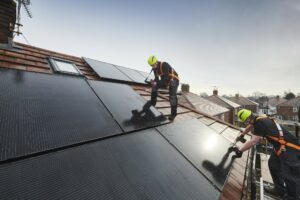
How Solar Panels Work (Even on Cloudy Days)
Understanding solar technology
Solar panels generate electricity using photovoltaic (PV) cells, which convert sunlight into electrical energy. While it’s true that panels produce more energy in direct sunlight, they don’t rely on full sun to function. Even on cloudy or overcast days, PV cells can capture diffused sunlight, the scattered daylight that penetrates clouds and convert it into usable electricity. This means that solar panels can continue generating power throughout the year, even in less sunny climates.
How solar panels work in poor weather
Modern solar technology is surprisingly efficient in a wide range of weather conditions. On cloudy days, solar panels typically produce 10–25% of their peak output, which can still cover part of your household energy needs. Some systems also include microinverters or power optimizers, which allow each panel to operate independently. This ensures that even if part of your roof is shaded or covered by clouds, the rest of the system continues to generate electricity efficiently.
Rainy weather can even be beneficial in some cases. Rain naturally cleans the panels, removing dust and debris that can block sunlight, helping them maintain optimum performance. Snow, while potentially blocking panels temporarily, often slides off angled rooftops, and panels can still generate electricity from the sunlight reflected off the snow.
What happens to the electricity?
The electricity generated by your solar panels can be used immediately in your home, powering lights, appliances, and heating systems. If your panels produce more electricity than your household needs, the excess can be exported back to the grid. This can sometimes earn you payments or credits, depending on government schemes or your energy supplier. This system ensures you get the maximum value from your solar installation, even during days with limited sunlight.
Reliability of solar panels
Solar panels are designed to perform consistently in a variety of climates. With proper installation and maintenance, they can generate energy efficiently for 25 years or more. Even in regions with frequent clouds or seasonal variations, solar technology provides a reliable, long-term energy solution for homeowners.
How solar panel work: take action today
If you want to reduce energy bills and make your home more environmentally friendly, solar panels are a smart choice, even in areas with less sun. Lifetime Savings can assess your property to determine whether you qualify for solar funding and guide you through the installation process.
Take control of your energy and start generating your own electricity contact Lifetime Savings today to explore your solar panel options.
See what solar grants are available.